The long way
to Milwaukee.

Before Milwaukee, there were neighborhood ballfields, small college dugouts, Notre Dame, fifteen seasons at Arizona State and a trip to the Olympics. There were teachers, second chances and friendships that stayed. This is the story of Murph, and the people who became part of his life along the way.

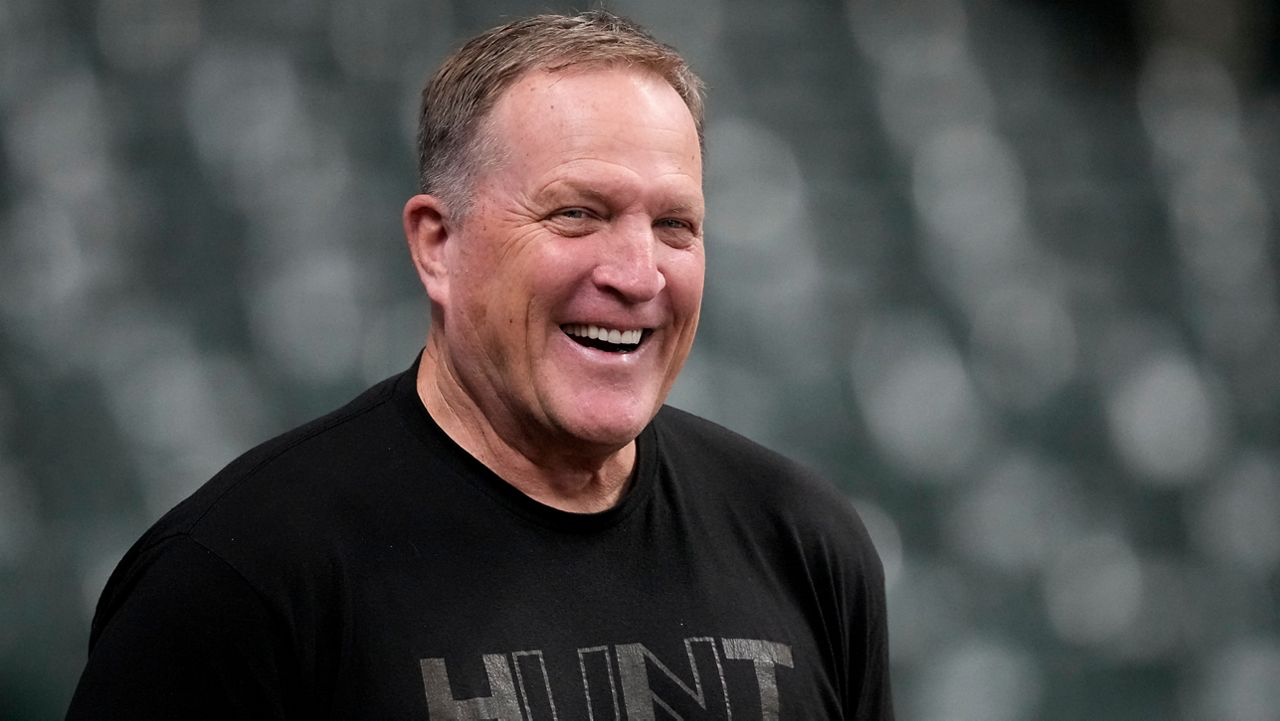
Murph smiling in a black shirt

An Eastwood beginning.

Murph grew up in Syracuse’s Eastwood neighborhood, the youngest of three brothers. Baseball meant Wayne’s Bike in Little League, pickup games at Nichols Field and friendships that became part of his life. More than five decades later, some of those childhood friends were in the stands when he managed Milwaukee in the World Series.

He followed older brothers Dan and Dave to Christian Brothers Academy in 1973. Football, basketball and baseball filled his early school years. He pitched, played first base and won two consecutive Kid Gloves boxing championships. His school’s tribute also remembers a teenager who loved making people laugh.

Before his senior baseball season in 1977, coach Pete Birmingham asked him to become a leader. Murph responded with a championship season and first-team All-City recognition. The teenager learning to accept responsibility would spend much of his life asking young players to do the same.

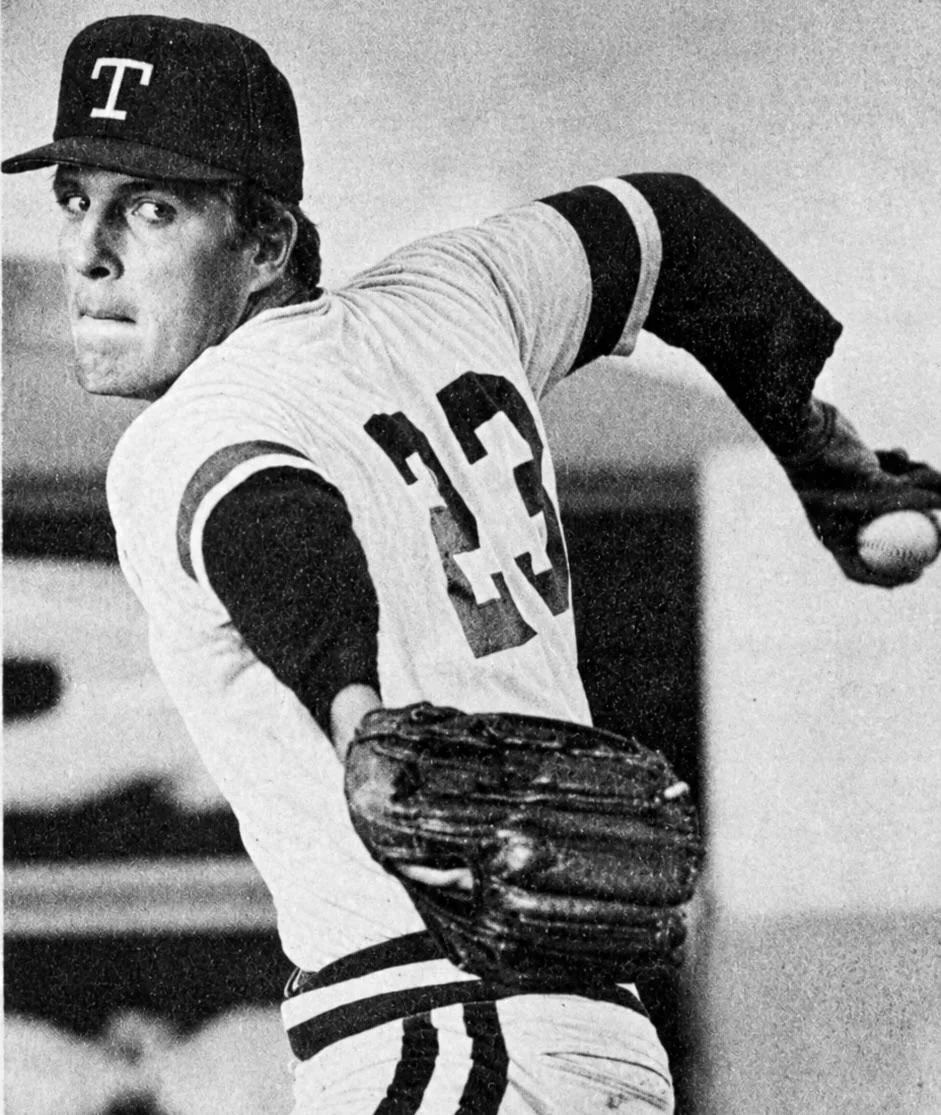
An archival photograph of Pat Murphy pitching

Learning the game. Learning to teach.

At Florida Atlantic, Murph played in the program’s early years and learned the game from several positions. In 1982, his six wins and team-leading 2.66 ERA earned him FAU’s Most Outstanding Pitcher award. He earned both bachelor’s and master’s degrees there, and the university inducted him into its Baseball Hall of Fame in 2008.

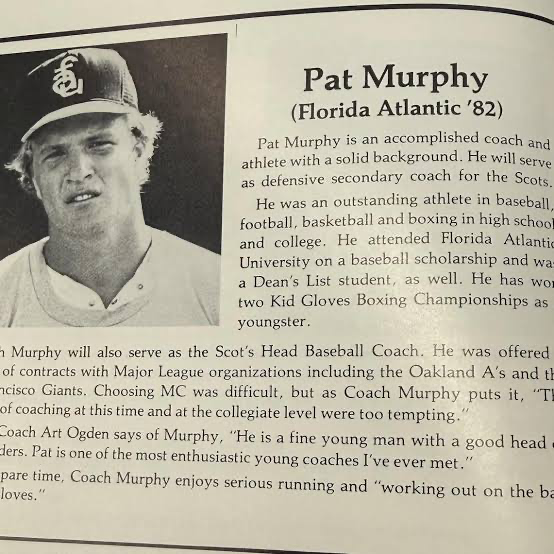
Playing professionally and learning to coach became overlapping chapters. He arrived at Maryville College in Tennessee in 1982, working with the football team and leading the baseball team through its 1983 season. Former player Pat Moyer later credited Murph’s influence with helping inspire his own years of coaching young people.

After returning to FAU as an assistant in 1984 and 1985, he became head coach at Claremont-Mudd-Scripps. His first team, in 1986, won the program’s first conference baseball championship since 1975 and reached the national Division III top ten. The campuses were small. The expectations were already growing.

During the 1986 season, Murph also served as player and manager of the Tri-Cities Triplets, his first professional managing assignment.
An early Maryville College biography of Pat Murphy

Building belief at Notre Dame.

Notre Dame hired Murph in 1987. His first season followed in 1988, when a team that had gone 15–29 the year before won 39 games. By 1989, the Irish were back in the NCAA tournament. Three consecutive regional finals followed from 1992 through 1994, turning a rebuilding assignment into a program with national expectations.

Among his earliest recruits was Craig Counsell, who became a four-year starter. Their conversations about baseball continued through Counsell’s playing career and, eventually, into a shared Major League dugout. The relationship is one of the clearest threads connecting Murph’s college years to Milwaukee.

In 2011, Notre Dame dedicated the Coach Pat Murphy Locker Room and presented him with an honorary monogram. His brothers, Counsell and Counsell’s father were among those who helped make the project possible. The recognition came long after his final season in South Bend.

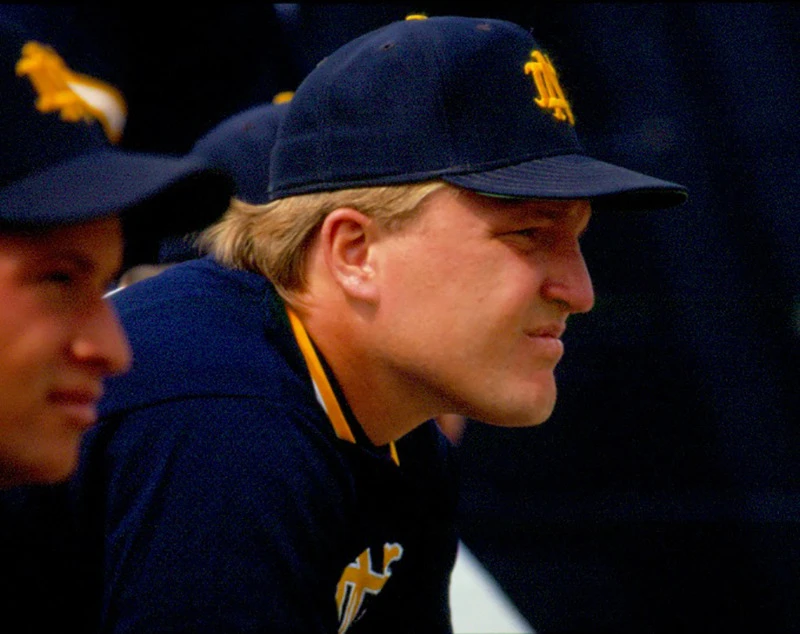
Murph coaching at Notre Dame

Fifteen seasons in Tempe.

From 1995 through 2009, Murph led Arizona State. The 1998 Sun Devils reached the national championship game, and Baseball America named him National Coach of the Year. He earned four Pac-10 Coach of the Year awards and coached future Major Leaguers including Dustin Pedroia, Andre Ethier, Willie Bloomquist and Mike Leake.

The program’s achievements extended to the classroom. Casey Myers was named Academic All-American of the Year in 2000 and 2001; Mike Leake received the same honor in 2009.

When Pedroia retired, Murph recalled the young shortstop’s influence on the entire program. Pedroia helped establish a team that valued toughness, preparation and the small contributions that help a club win. He also gave back his scholarship to help recruit other players, following Bloomquist’s example.

Those are the details Murph continued to remember years later: how a player competed, how he treated the team and what he made possible for the people around him. The college record tells one part of that story. The relationships tell another.

College seasons and honors
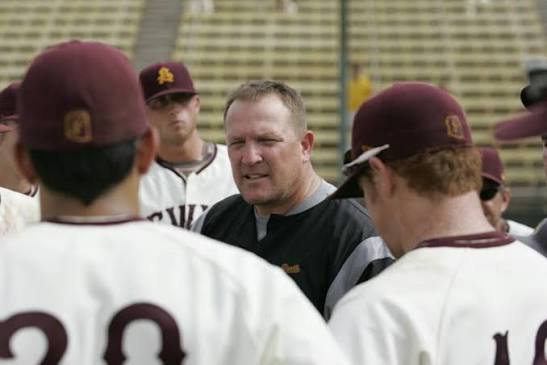
Murph speaking with a group of Arizona State baseball players

A game without borders.

His international chapter began well before the Olympics. In 1987, Murph led the Netherlands to a European championship and qualification for the Seoul Games. He declined the invitation to coach at the Seoul Olympics so he could concentrate on his new responsibilities at Notre Dame.

Thirteen years later, he returned to lead the Netherlands at the 2000 Sydney Olympics. The tournament included a 4–2 victory over Cuba, the baseball power’s first Olympic defeat. Coaching across countries became another part of a career built through different teams, different settings and a shared love of the game.

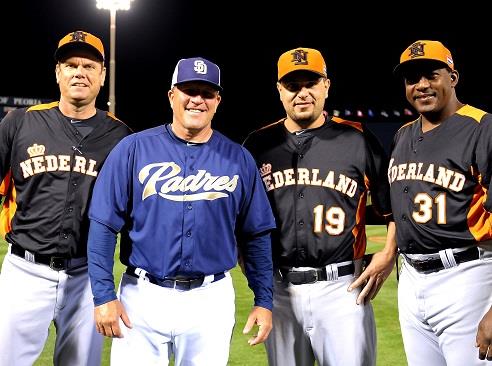
A reunion with Netherlands baseball players

Another climb.

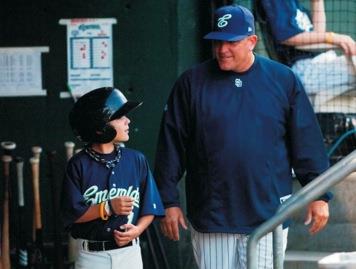
After his Arizona State tenure ended, Murph began again in professional baseball. San Diego hired him in 2010 as special assistant to baseball operations. He then managed the Eugene Emeralds in 2011 and 2012, finishing with the Northwest League’s best overall record in both seasons.

Triple-A Tucson followed in 2013. He became the first manager of the El Paso Chihuahuas for their inaugural 2014 season, then San Diego’s interim manager in 2015. College coaching, player development, launching a new team and leading a Major League clubhouse each demanded something different. His path to Milwaukee ran through all of them.

Murph in the Eugene Emeralds dugout with a young player

Milwaukee, at last.

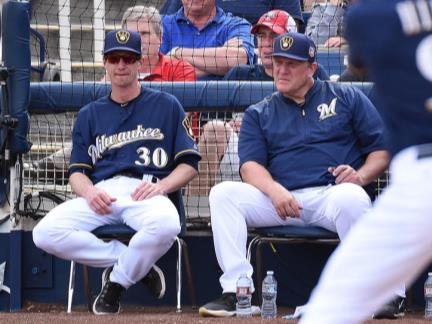
In Milwaukee, a former player became his manager. Murph joined Craig Counsell’s staff as bench coach for the 2016 season and spent eight seasons in that role. The Brewers named him the twentieth manager in franchise history on November 15, 2023. His first full Major League season in charge began in 2024.

In 2026, he led Milwaukee to its first World Series championship and earned a third consecutive National League Manager of the Year award.

The journey connects small college fields, international tournaments and minor league towns with baseball’s biggest stage. It also explains why his experience reaches well beyond the decisions made during nine innings.

Explore the full record
Two coaches together in the Milwaukee dugout

The people who
carried it forward.

Former players, assistant coaches and staff members have gone on to lead teams and athletic departments of their own. Each has a different connection to Murph. Together, their paths show how far those relationships reach.

Pat Murphy at a Notre Dame baseball event
  • Craig Counsell

    Notre Dame player, 1989–1992

    A former recruit who became a Major League manager and later brought Murph to Milwaukee as his bench coach. Their baseball conversation has continued for decades.

    Notre Dame: a lasting connection
  • Willie Bloomquist

    Arizona State player, 1997–1999

    An All-American and Pac-10 Player of the Year during Murph’s tenure, Bloomquist returned to Arizona State as head baseball coach after his Major League career.

    Arizona State
  • Andy Stankiewicz

    Arizona State assistant, 2007–2009

    Served on Murph’s staff before leading Grand Canyon for eleven seasons and becoming USC’s head baseball coach.

    USC biography
  • Josh Holliday

    Arizona State assistant, 2008–2009

    Coached on Murph’s staff in Tempe, continued as an assistant at Vanderbilt and began his tenure as Oklahoma State’s head coach in 2013.

    Oklahoma State biography
  • Graham Rossini

    Arizona State baseball operations

    Worked in baseball operations during Murph’s ASU years. When he became Athletics Director in 2024, Rossini publicly thanked Murph as one of the mentors who had shaped his career.

    ASU introductory press conference
Murph with two children in a family portrait

Dad, before
anything else.

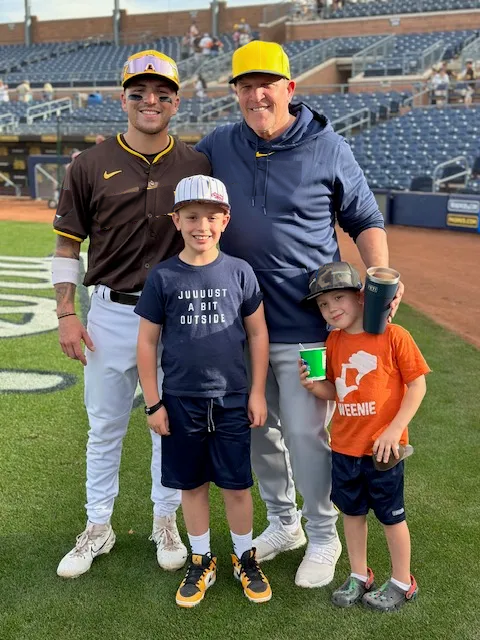
Murph is a father to Keli, Kai, Austin and Jaxon, and a grandfather. Family has traveled through the baseball years with him. One treasured photograph captures him leading Arizona State onto the field at the 2005 College World Series, holding young Kai’s hand. Years later, Kai turned that same image into a tattoo.

Fatherhood is also part of his everyday preparation. In the quiet of early mornings, he writes down priorities, people he wants to focus on and time he wants to spend with his children. His longtime friend and mentor, mental skills coach Harvey Dorfman, helped shape his belief that love and discipline belong together, and that time is one of the clearest ways to show care.

The family story continues alongside the baseball story. Kai has followed his own path in professional baseball. Keli has spoken about her father’s willingness to keep working on himself. For Murph, growing as a parent remains part of growing as a person.

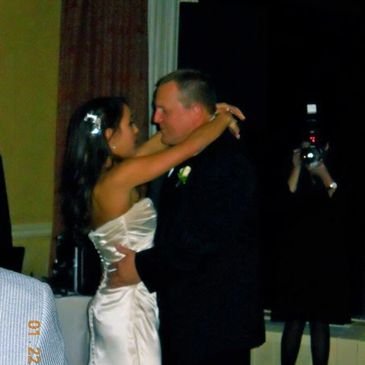
Pat Murphy dancing with his daughter Keli

Keli

Murph’s daughter grew up in Morristown, Tennessee. After a year at the University of Tennessee, she transferred to Arizona State to complete her degree and helped her dad raise Kai. Today, Keli and her husband Pedro are raising Lucelia and Nayli, Murph’s granddaughters.

Kai

Murph’s oldest son carried the family’s baseball connection from Arizona State into professional baseball with the San Diego Padres organization. Through those years, the game has been one more connection between father and son.

Austin

One of Murph’s younger sons, Austin is growing up with baseball all around him. He shares that connection with his dad and brothers.

Jaxon

The youngest of Murph’s four children, Jaxon looks up to his older siblings. He has his own place in the family story as it continues to grow.

Father and son.
Across the diamond.

In February 2024, Kai brought San Diego’s lineup card to home plate before a spring training game against Murph’s Milwaukee team. Later, he hit a two-run double.

For Murph, the feeling was simple. Father and son could compete on the field and carry the memory home together.

“Just extremely proud.”

Murph, after facing Kai in spring training.
Read the family story
Murph and family together on a baseball field

The people
who stay.

His teachers came from beyond baseball. At Notre Dame, Lou Holtz welcomed Murph into football meetings and practices. Murph watched how he prepared, handled a staff and treated people. Conversations with Barry Alvarez offered another view of leadership. Years later, he still spoke about what those coaches had taught him.

In Milwaukee, Bob Uecker became another important friend. Murph has described Uecker’s ability to make the person in front of him feel important, whether that person was a star or someone meeting him for the first time. That generosity stayed with him. So did the humor.

Murph and Bob Uecker sharing a joyful clubhouse celebration after Milwaukee’s 2024 division title
Murph and Bob Uecker celebrating Milwaukee’s 2024 NL Central title.Watch the celebration
The people who shaped the person

Some influences began in a classroom or a dugout. Others came through friendship, family or music. Murph’s story carries all of them.

Dorothy and Ty Murphy
His first influences were at home. Murph credits his mother and father with helping shape the person he is.
Steve Traylor
At Florida Atlantic, Traylor gave Murph a chance to return to school and play baseball. He also recognized that coaching could become his life’s work.
Muhammad Ali
A personal hero who became a friend. Murph continues to draw on Ali’s advice about facing fear.
Bob Welch
The former Major League pitcher was a close friend. Murph named his backyard ballpark Bob Welch Field in his memory.
Pat Tillman
Murph coached Kevin Tillman at Arizona State and became close to his brother Pat. He later helped fund a training room honoring both brothers.
Ara Parseghian
Murph remembers the Notre Dame football coach as a fellow coach and friend.
Rick Majerus
Murph includes Rick Majerus among the coaches who influenced him.
A close portrait of Murph

Perspective,
earned.

Murph survived a heart attack during a team workout on August 1, 2020, and rejoined the Brewers in September.

When he recalled the experience during the 2026 World Series, the humor was still there. He remembered joking with the ambulance crew and showing photographs of his children. Beneath the jokes was the importance of being there as his young sons grew up.

He speaks just as openly about continuing to learn. Becoming a better coach, father and person remains ongoing work. His willingness to reconsider himself is part of the story behind the confidence people see in the dugout.

“Bro, next of kin? I’m not going anywhere.”

Murph, recalling his 2020 heart attack

His way
of leading.

Murph asks players to meet a standard, and he expects himself to keep learning how to reach them. After the 2026 championship, he spoke about earning trust, paying attention to details and helping players believe in themselves. He also acknowledged how much his players continued to teach him.

His relationship with William Contreras offered one example. Murph described the responsibility to understand a player’s personality and find an effective way to lead him. Care and accountability belonged in the same conversation. The coach had to make adjustments, too.

“The ones that are toughest to love need the love the most.”

Pat Murphy, reflecting on what his players teach him.
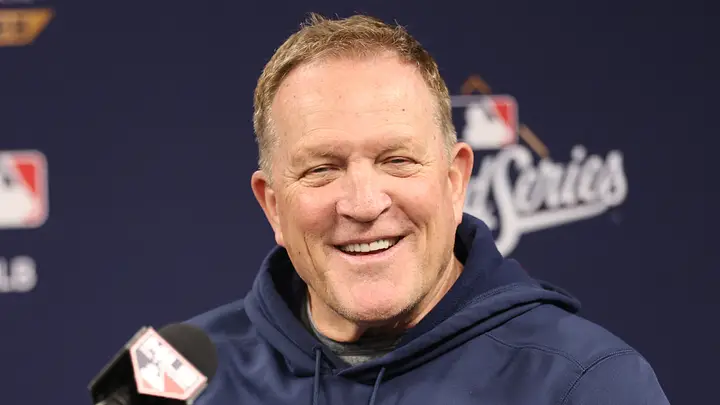
Pat Murphy smiling at a press conference

Still unmistakably
Murph.

The humor has been there since his school days. So has the enthusiasm. Murph first saw Bruce Springsteen in 1980 while attending college in Florida. He went along with someone he liked and came away captivated by the music, energy and commitment of the performance. The interest became a lifelong passion. He later began giving his seasons Springsteen song themes, including “Last Man Standing” in 2026.

The same voice can turn a tense baseball moment into a simple instruction. During the 2026 postseason, he told hitters facing San Diego closer Mason Miller to “get four before three”: make him throw strikes and work toward a walk. Three walks helped set up Jackson Chourio’s winning hit.

There is room in this story for the preparation, the directness and the unexpected laugh. Pocket Pancake belongs here, too. To get to know Murph, leave room for the things only Murph would say.

Step into the Murphisms

Giving back
has a history.

Explore Murph 42

In 1995, Murph created PTM Programs for Youth, beginning with the Guadalupe Project in Arizona. Baseball instruction went hand in hand with life skills. The Sandlot All-Stars later brought children ages five through nine together with Arizona State coaches and student-athletes for mentoring throughout the year.

The backyard Sandlot became the beginning of a wider baseball organization. Murph founded the program in 2004 and handed its leadership to Rob Gorrell in 2008. PTM has since been revived around its original purpose of helping children grow through baseball.

His giving has also honored people and places that mattered to him. He contributed $100,000 toward Arizona State’s Tillman Room and helped fund Maryville’s new baseball scoreboard, dedicated in April 2026. These stories now live alongside Murph 42, his foundation, with a way to connect about the next chapter.

Hear the stories
from Murph.

There is a lifetime behind the perspective. Bring Murph into a conversation about leading people, handling setbacks, building trust and continuing to grow.

Inquire about speaking